



laminador de titanio
Exploring the Universe of Titanium Lamination Advantages, Processes, and Applications Titanium lamination has consistently emerged as an innovative solution improving the functionality and durability across various industries. Encompassing an array of applications, titanium lamination involves adhering titanium layers onto surfaces or combining it with other metals to create specialized composites. Renowned for its exceptional properties, titanium offers superior strength-to-weight ratios, corrosion resistance, and remarkable biocompatibility. Understanding the nuances of this process and its wide-ranging benefits is crucial for industries keen on leveraging titanium's extraordinary capabilities. One of the core advantages of titanium lamination is its unparalleled strength and lightness compared to other metals. Titanium alloys boast strength comparable to that of stainless steel but weigh nearly half as much. This property is particularly beneficial in aerospace, automotive, and sporting goods industries where performance enhancement without adding excessive weight is paramount. For instance, in aerospace engineering, titanium's high tensile strength combined with its lightweight nature contributes to reduced fuel consumption and improved payload capacities. Moreover, the corrosion resistance of laminated titanium is a significant advantage . In industries where materials are exposed to harsh environments, such as marine or petrochemical sectors, titanium coatings prolong component lifespan and reduce maintenance costs. Titanium’s inertness to various chemicals and its ability to resist extreme temperatures further enhances its appeal in these demanding applications. For example, titanium-clad heat exchangers are often used in chemical processing plants due to their resistance to the corrosive effects of various acids and their ability to withstand high temperatures. laminazione titanio The process of laminating titanium is both intricate and precise, involving advanced technological expertise to ensure optimal application. Techniques such as explosive welding, diffusion bonding, or roll bonding are commonly used to bind titanium layers to other substrates. Explosive welding uses highly controlled detonations to achieve a metallurgical bond without melting the base materials. Diffusion bonding, on the other hand, relies on heat and pressure to achieve a solid-state bond at an atomic level, creating seamless, high-strength joints. These sophisticated processes require meticulous planning and control to retain titanium’s essential properties while enhancing the substrate's overall characteristics. In the medical field, titanium lamination plays a crucial role in improving the biocompatibility and functionality of implants and surgical instruments. Its compatibility with human tissues makes it invaluable for orthopedic, dental, and cardiovascular implants. Additionally, the laminated coatings on medical devices reduce the risk of infection and enhance the device's mechanical properties. This integration of titanium in medical technology underscores its importance in enhancing patient outcomes and surgical efficiencies. Emerging markets and the continuous evolution of technology also foresee a broader expansion of laminated titanium applications. In electronics, for example, titanium laminates are being examined for use in flexible circuits and high-tech gadgets, where durability and miniaturization are critical. In renewable energy sectors, titanium's ability to withstand environmental degradation is harnessed in components like wind turbine blades and solar panel frameworks, pointing toward sustainable development goals. In conclusion, the multifaceted benefits of titanium lamination—from strength, corrosion resistance, and biocompatibility to innovations in manufacturing processes—make it a transformative component in an array of industries. Industries investing in titanium lamination stand to gain a significant competitive edge, marked by enhanced product longevity, reduced maintenance costs, and improved performance metrics. As technology advances, the applications and processes surrounding titanium lamination are expected to become even more sophisticated, further solidifying its position as a material of the future. The commitment to leveraging this wonder metal reflects a broader industrial trend aimed at sustainability, efficiency, and cutting-edge innovation.

We have successfully executed over 500
projects around the world,
many first-of-their-kind
research projects and products in China, including
We have successfully executed over 500
projects around the world,
many first-of-their-kind
research projects and products in China, including
-
2004
The 1st hydraulic AGC system for hot rolling of ribbon steel
-
2006
The 1st AFC system used for 1450mm skin pass mill
-
2009
The 1st 5-stand tandem line with 2-stand POR & Uncoiler for 650mm ribbon steel
-
2012
The 1st reversing mill for 1380mm strip
-
2016
The 1st soft-rolling system used in skin pass mill
-
2019
The 1st fully automated medium-width tandem cold rolling mill
-
2021
The 1st 5000KN Twin-stand double skin pass mill
-
2022
The 1st coupled pickling line & tandem cold mill with two modes - big roller & small roller
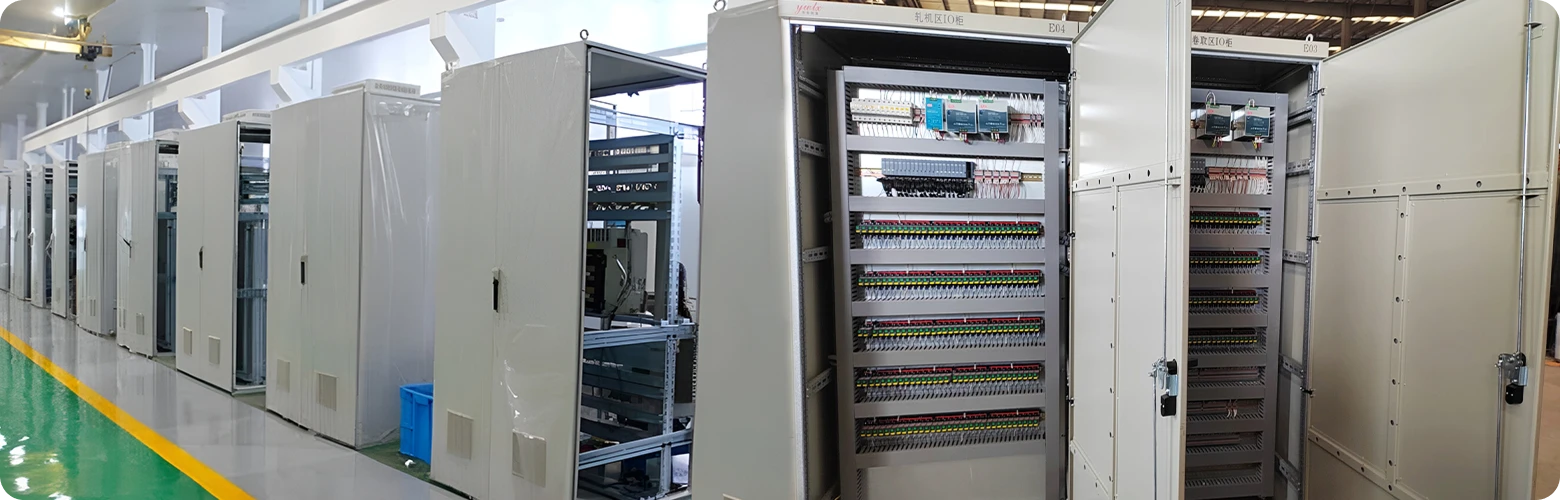
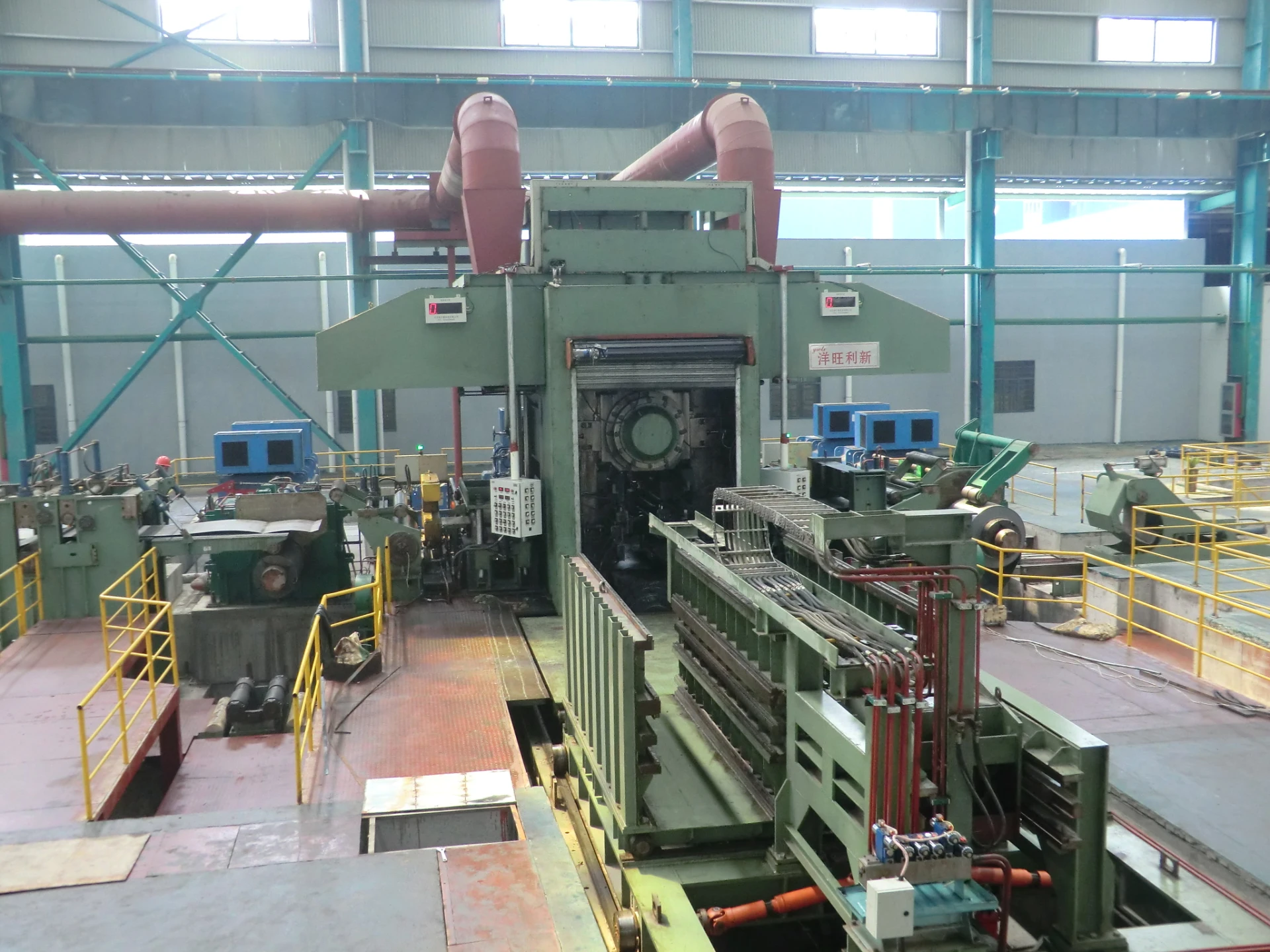
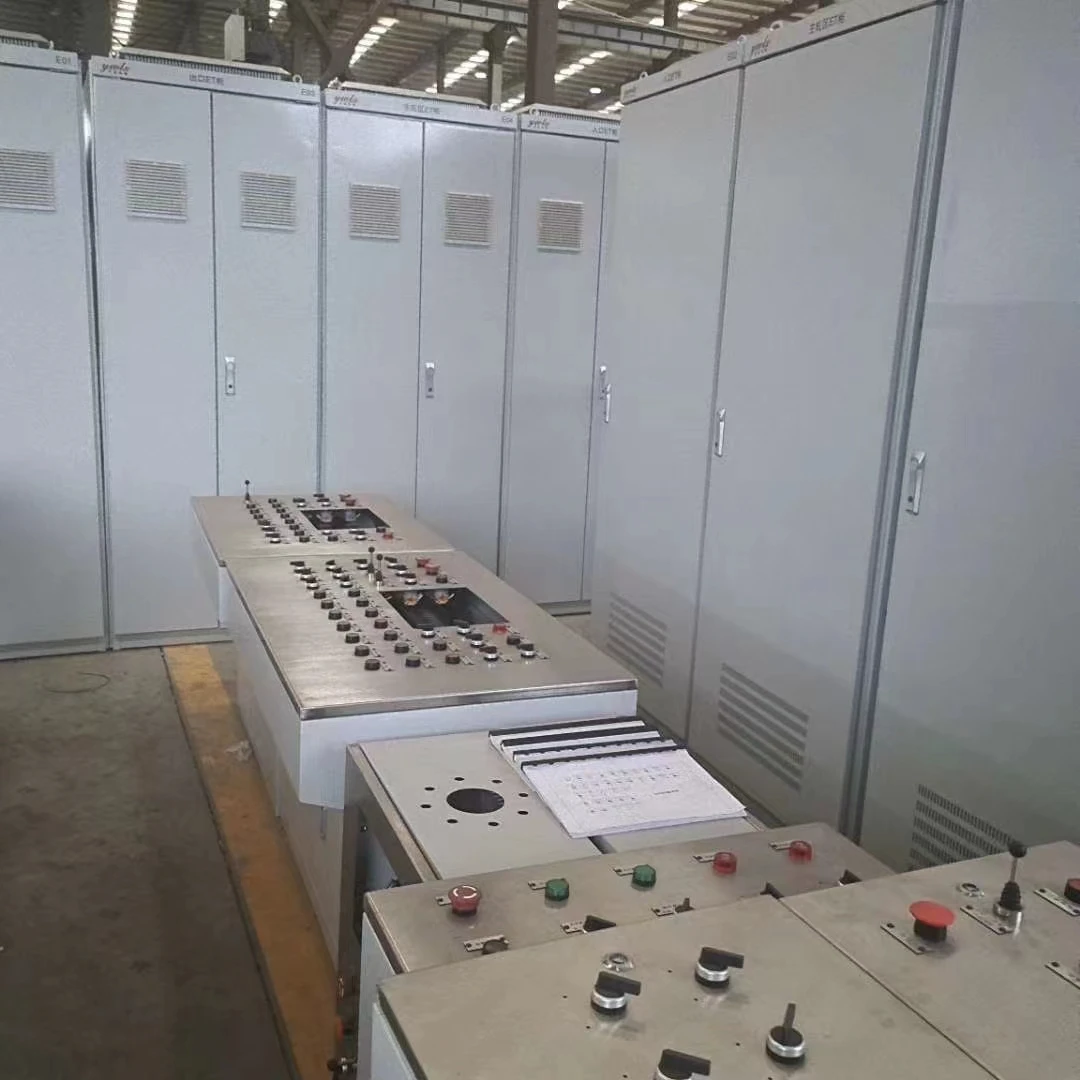
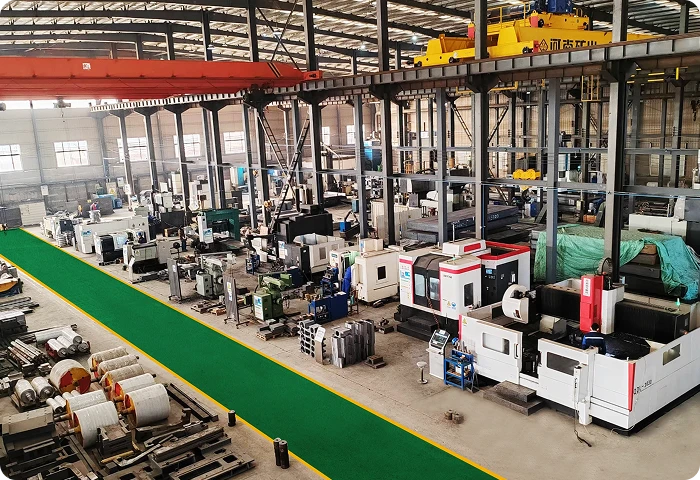
Yang Wang Li Xin operates a state-of-the-art facility over 66,000 square meters,and our manufacturing facility is fully equipped with high-tech machinery and high-capacity cranes. This enables us to handle large work pieces measuring 4.5m in width, 10m in length, and 1.5m in height, guaranteeing our capacity to produce 1800mm skin-pass mills and 1450mm rolling mills. The individual piece can weigh up to 100 tons.

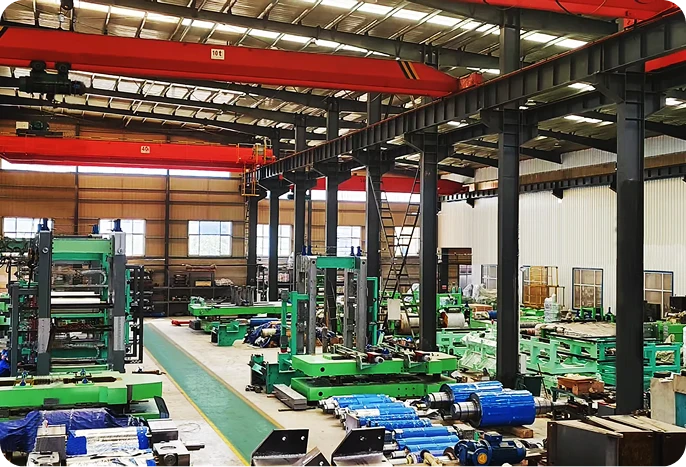

Quality is fundamental to the enterprise survival. We have established a comprehensive and meticulous quality management system and have successfully obtained ISO14000 certification. Starting from the design source, it supervises the entire production cycle, including design, procurement, processing, assembly, in-factory testing, installation, and online commissioning. The workshop is equipped with measuring tools like vernier calipers, spectrometers, hardness testers, and ultrasonic flaw detectors. They are used to check materials and control tolerances to ensure the final equipment meets or exceeds requirements. All products have a unique code, This enables the easy identification and traceability of the equipment components and ensures full control of quality.


-
 Automatic Gauge Control Cold Rolling Mill: Why Our AGC?automatic gauge control cold rolling mill,automatic gauge control in strip rolling,hydraulic automatic gauge control is a key solution in the manufacturing industry, specifically within Manufacturing of industrial automation equipment and Manufacturing of automation control systems for metallurgical industry. This article explores how Beijing Yang Wang Li Xin Sci&Tech Co.,Ltd. supports professiona
 -
 прокатная компанияRenting a car or any vehicle from a leasing company is a convenient solution that many individuals and businesses opt for due to its numerous benefits. While the average consumer may not consider all the behind-the-scenes workings of such a company, a deeper understanding can enhance appreciation and trust in their services. Here’s an expert look into the importance of choosing the right leasing c
 -
 cost of tmt bar rolling millUnderstanding the cost of a TMT bar rolling mill is crucial for manufacturers aiming to make informed investment decisions . Truthfully, it's a straightforward yet nuanced topic that demands a grasp of both market dynamics and technical intricacies. Firstly, evaluating the capital investment for a TMT bar rolling mill involves more than just the purchase price of the machinery. It’s essential to a


